
- New
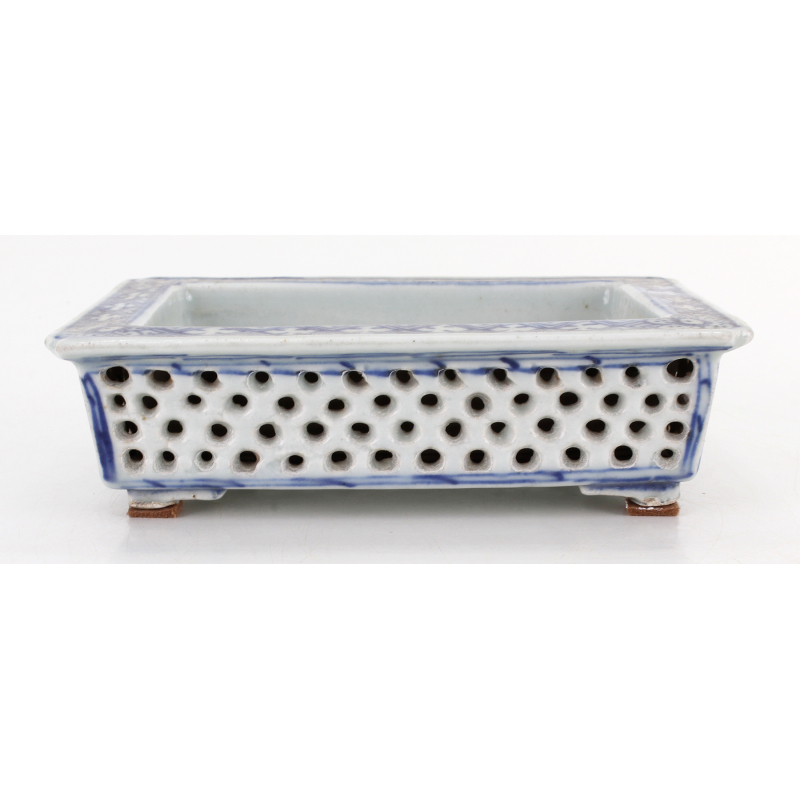
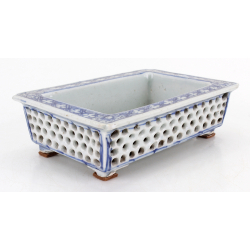
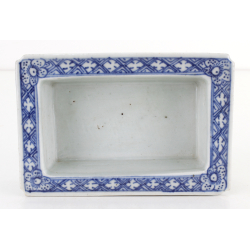
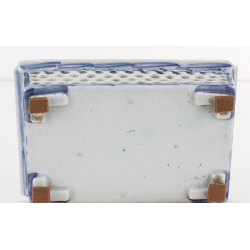
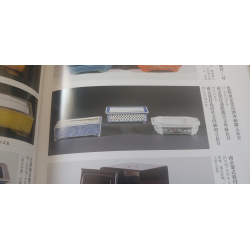
“to-o-shi-bori” ceramic (通し彫り / tōshi-bori). It should be noted that it has repairs intended to raise the legs and that it has lost part of two of them, which makes it limp slightly. It appears in volume II of Bonki Dai Zukan (encyclopedia of bonsai pots).
The term “to-o-shi-bori” (通し彫り / tōshi-bori) designates a type of treatment or finish for the body of the pot, not a pictorial decorative style. In Japanese, bori (彫り) means “carved” or “engraved,” while tōshi (通し) alludes to the idea of “piercing” or “perforating.” Thus, it can be translated as “openwork carving” or “pierced.” These pieces are characterized by meticulous hand-carving done before firing, which creates effects of great visual lightness and, sometimes, subtle transparency. This technique, of Chinese origin, became widespread in Japan during the Taishō era. Traditionally, they were used in arrangements of kusamono or shitakusa—accent plants that require more delicate control of the substrate—as well as incense burners. It is not uncommon to find examples that have had drainage holes drilled into them after firing, due to their reuse as bonsai pots, attracted by their elegance and depth. However, this particular piece is preserved in its original state, just as it was fired, which increases its interest and value from a collector's perspective.
“to-o-shi-bori” ceramic (通し彫り / tōshi-bori). It should be noted that it has repairs intended to raise the legs and that it has lost part of two of them, which makes it limp slightly. It appears in volume II of Bonki Dai Zukan (encyclopedia of bonsai pots).