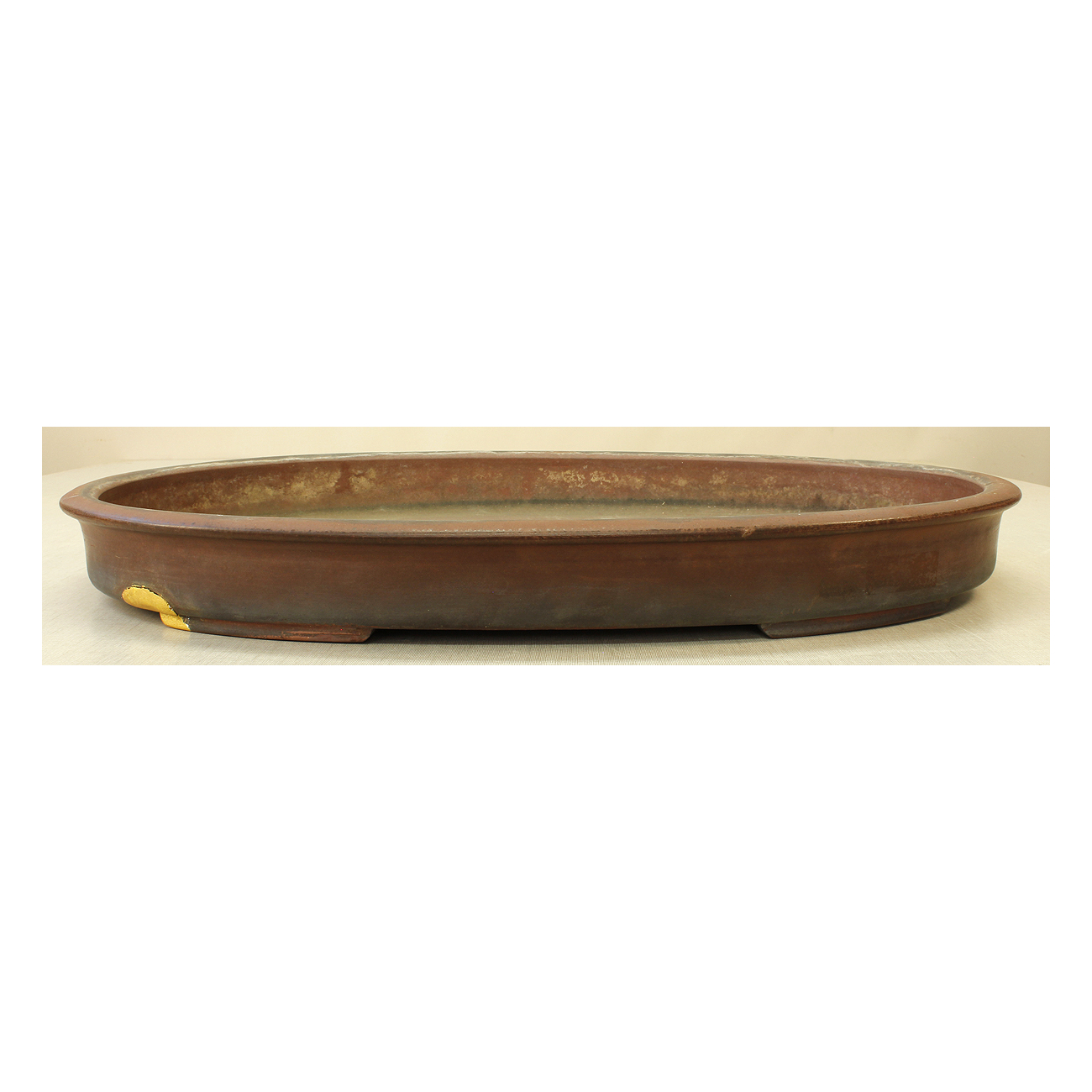
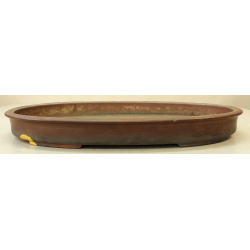
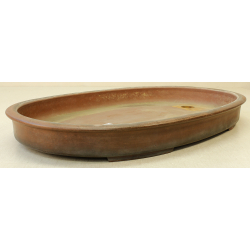
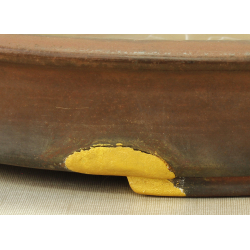

Antique Chinese bonsai pot with the classic Nakawatari oval cut. The lip curves outwards, forming a smooth, gradual "soto-buchi" shape. Introduced to Japan between 1800 and 1911. Marked: KATSUTOKUWA. Repair on the foot with metallic paint imitating kintsugi (gold).
The antique Chinese bonsai pots that arrived in Japan are named according to the period in which they were imported.
Kowatari designates the pieces that arrived before 1800.
Nakawatari, or "middle cross," applies to flowerpots introduced between 1800 and 1911; John Yoshio Naka associates this period with the Meiji era (1869-1911). Shinwatari or Shinto (新渡), also called Imawatari (今渡), literally means "new cross" and refers to flowerpots that arrived between 1911 and 1940. Naka extends this period to 1945 and describes them precisely as "the flowerpots that arrived before the start of World War II."
Antique Chinese bonsai pot with the classic Nakawatari oval cut. The lip curves outwards, forming a smooth, gradual "soto-buchi" shape. Introduced to Japan between 1800 and 1911. Marked: KATSUTOKUWA. Repair on the foot with metallic paint imitating kintsugi (gold).