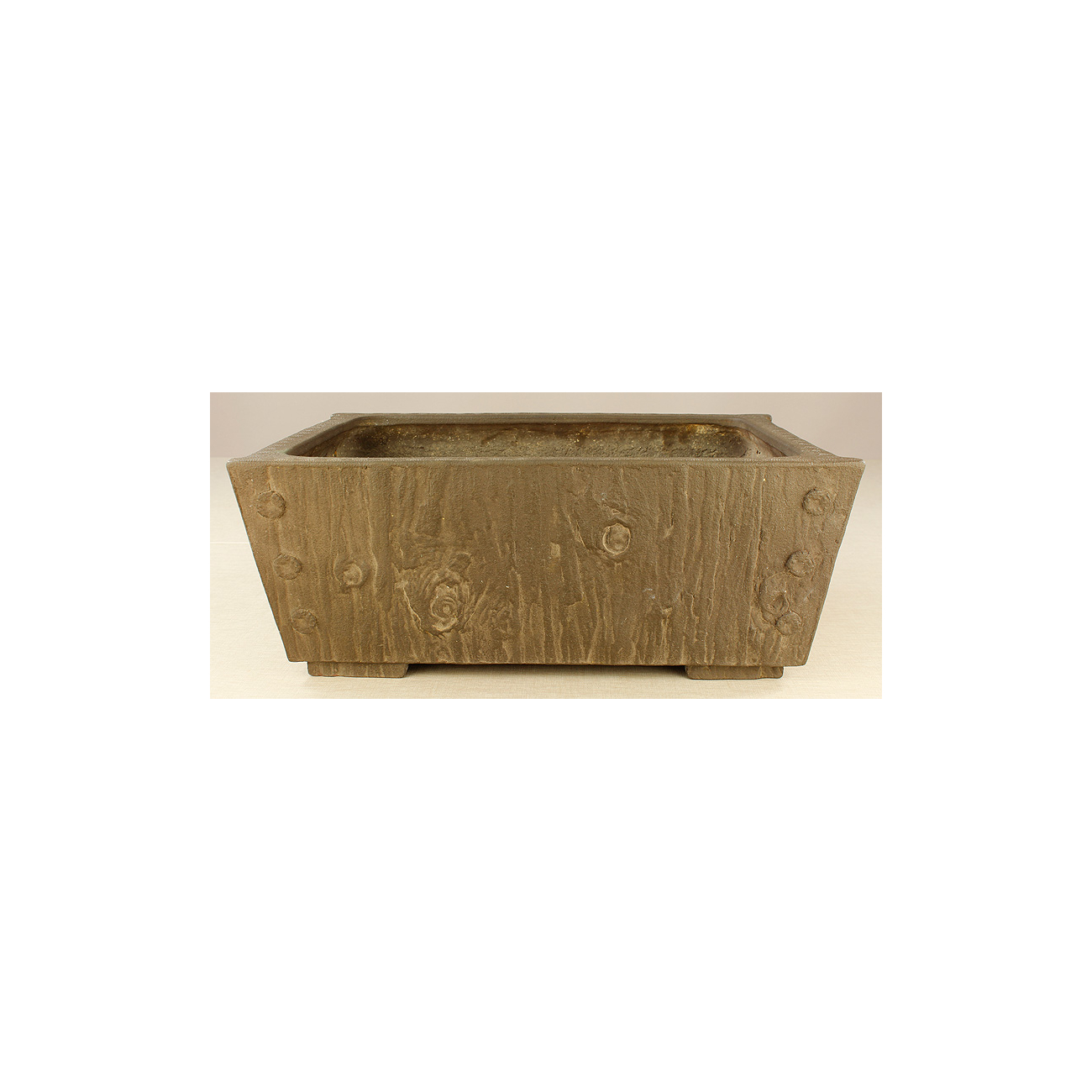
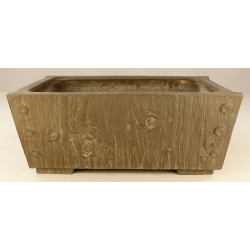
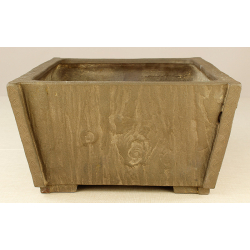
A truly unique bonsai pot, considered a genuine rarity. Its design imitates wood through a delicate relief work of the rough clay or Ara-Dei in its "wood grain" variant. Created by the renowned Tokoname bonsai artist Sadamitsu Kataoka, fired at the Yamaaki kiln.
Sadamitsu Kataoka (born February 16, 1943, Shōwa era 18) was a prominent Japanese ceramic master from Tokoname and a key figure in the second generation of the historic Yamaaki kiln. The eldest son of Akiji Kataoka—the kiln's founder and a renowned ceramicist—he trained in the craft from a young age under his father's direct tutelage, joining the family factory at 18 after completing his ceramic studies. Within the Yamaaki lineage, Sadamitsu played a fundamental role in consolidating the workshop's style and identity, decisively contributing to its prestige in the field of bonsai ceramics and directly influencing his younger brother, Kataoka Toshio. In 1985, he adopted the artistic name Koshousen, the mark he used to sign his works until the kiln's final closure in 2011. His production is distinguished by its technical quality, the delicacy of its finishes, and a remarkable aesthetic sensibility—qualities that have made his pots highly prized and sought after by bonsai collectors worldwide. Recognized as one of the traditional artisans of Tokoname (Dento Kōgeishi), Sadamitsu Kataoka left a legacy that combines tradition, refinement, and a profound understanding of formal balance in ceramics. Tokoname, from the Yamaaki kiln.
A truly unique bonsai pot, considered a genuine rarity. Its design imitates wood through a delicate relief work of the rough clay or Ara-Dei in its "wood grain" variant. Created by the renowned Tokoname bonsai artist Sadamitsu Kataoka, fired at the Yamaaki kiln.